Flue Liner Damage
Cracked, missing, or displaced clay tiles and deteriorated joints can create paths for heat and combustion gases. Metal liners are checked for accessible signs of corrosion, separation, or improper connection.
Serving Eugene, Oregon & surrounding areas
Mon–Fri 8am–6pm Sat 9am–2pm
Chimney Inspection Service in Eugene, Oregon
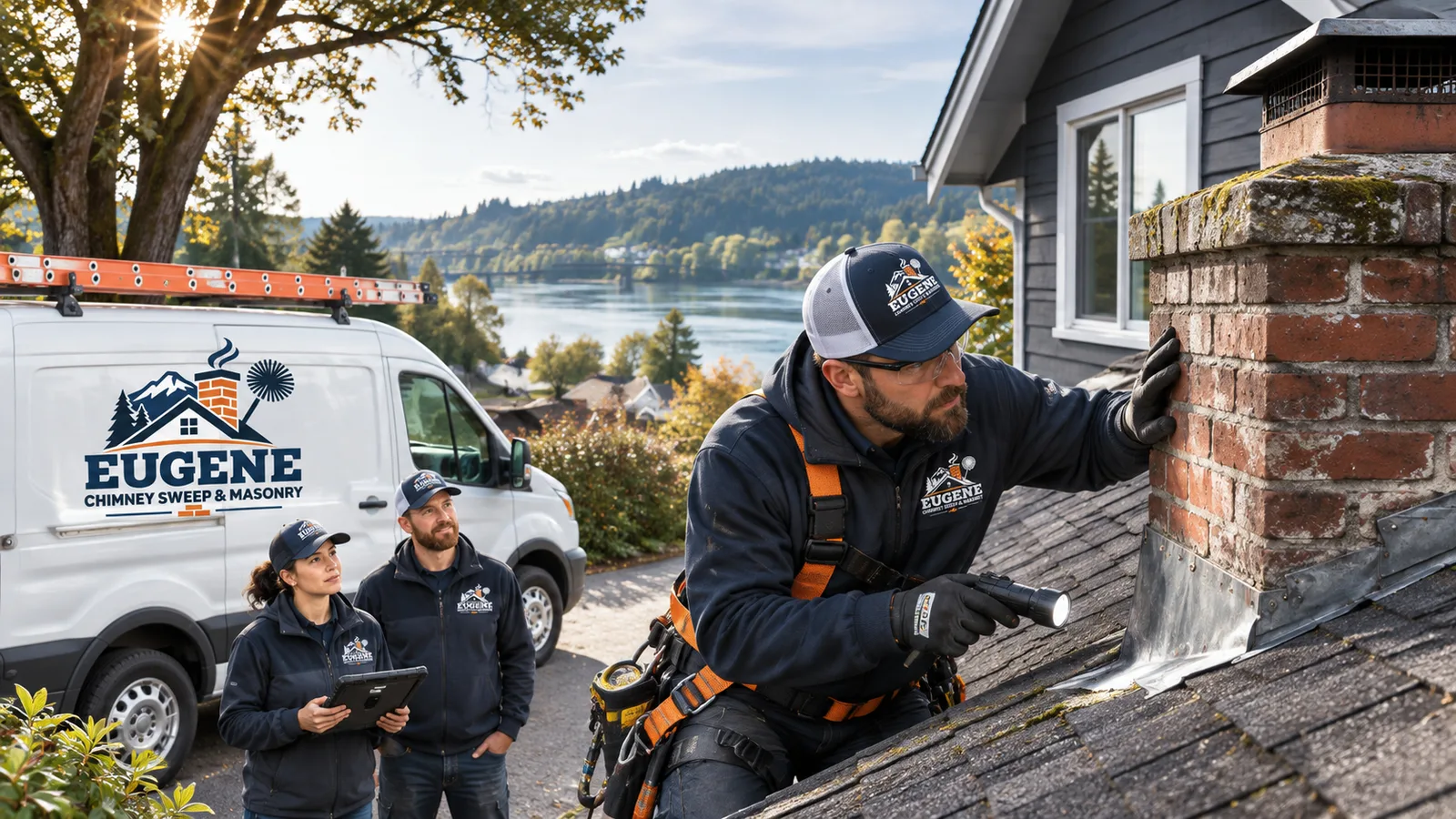
Get a clear assessment of visible damage, fire hazards, moisture entry, and maintenance needs before small defects become expensive repairs.
Condition-Based Assessment
A chimney inspection Eugene homeowners can rely on should answer practical questions: Is the chimney safe to use? Is water getting into the structure? Are the flue, masonry, cap, crown, and flashing in serviceable condition? Eugene Chimney Sweep & Masonry examines accessible components, documents concerns, and explains which findings need prompt attention versus routine monitoring.
We approach each inspection as a professional chimney sweep company in Eugene, OR, treating it as a fact-finding visit rather than a reason to recommend unnecessary work. You receive a clear account of observed conditions and sensible next steps based on the chimney's construction, use, and accessibility.
Western Oregon's long wet season makes moisture management an important part of local chimney care. Open joints, a cracked crown, failed flashing, or a missing cap can let water reach masonry and nearby building materials. Repeated wetting can accelerate mortar deterioration, corrode metal components, and leave stains near the fireplace or ceiling. An inspection helps locate likely entry points before repair decisions are made.
Inspection Scope
The inspection starts with the readily accessible exterior and interior portions of the chimney system. Outside, the inspector looks at the chimney stack, mortar joints, brick or block surfaces, crown or wash, cap, spark arrestor, flashing, and visible roofline transitions. Leaning, displaced masonry, open joints, biological growth, rust, and staining can point to movement or prolonged moisture exposure.
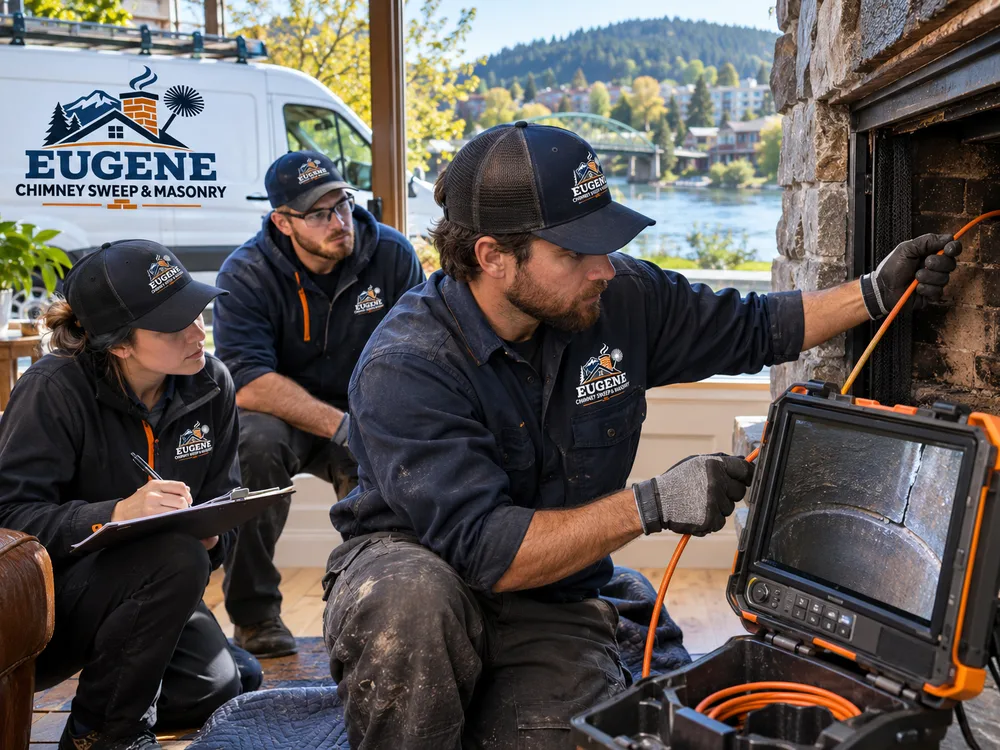
Inside, the review may include the firebox, damper area, smoke chamber, accessible connector components, and visible portions of the flue. The inspector looks for damaged firebrick, gaps, cracked or displaced flue tiles, deteriorated mortar joints, corrosion, deposits, and evidence of heat or smoke escaping where it should not.
A standard visual inspection has limits. Finished walls, roofing, deposits, appliance connections, and chimney geometry can conceal parts of the system. If conditions warrant a closer view, the inspector may recommend a camera-assisted examination or another inspection level. The recommendation should match the reason for concern, such as a chimney fire, a property transfer, a change in heating appliance, or suspected hidden damage.
Visible Defects and Hazards
Cracked, missing, or displaced clay tiles and deteriorated joints can create paths for heat and combustion gases. Metal liners are checked for accessible signs of corrosion, separation, or improper connection.
Deposits, nesting material, leaves, and fallen masonry can restrict the flue. An inspection identifies visible buildup and whether further evaluation or cleaning is appropriate before use.
Staining, efflorescence, rust, damp odors, and deteriorated mortar may indicate moisture intrusion. The cap, crown, masonry joints, and flashing are common areas to evaluate.
Spalled brick faces, open mortar joints, cracks, loose units, and movement are documented. The location and pattern help determine whether maintenance or more detailed structural review is needed.
Damaged firebrick, missing mortar, gaps, and irregular smoke-chamber surfaces can affect safe operation. Accessible areas are checked for visible heat and smoke pathways.
Visible combustible materials near hot components, poorly fitted connectors, and questionable appliance connections are noted so the appropriate trade can address them.
Inspection to Findings
Step 1 of 4
The visit begins with questions about fireplace or appliance use, known leaks, smoke problems, odors, past chimney fires, and previous repairs. Recent changes or a long period without use can affect the inspection approach.
Step 2 of 4
The inspector evaluates visible interior and exterior components using appropriate access and lighting. Roof access depends on pitch, surface condition, weather, and whether the area can be reached safely.
Step 3 of 4
Photos and notes identify the location and nature of observed defects. If part of the system cannot be inspected, that limitation should be made clear rather than treated as an assumed condition.
Step 4 of 4
Findings are separated into immediate safety concerns, needed maintenance, and items that can be watched over time. If repair or further evaluation is recommended, the reason and intended result are explained.
Eugene-Area Conditions
Eugene has homes from many building periods, and chimney construction varies accordingly. In older South University and Friendly homes, an inspection may encounter original masonry fireplaces, clay flue tiles, and mortar that has weathered through decades of rain. Older construction deserves careful attention at liner joints, firebox transitions, and roof penetrations, especially when repair history is unclear.
The historic housing found in parts of Whiteaker can include altered heating systems or chimneys that are no longer used as originally built. An abandoned connector opening, an appliance change, or an undocumented liner can affect what must be checked. In newer areas such as Santa Clara, factory-built fireplace systems may be more common, and those systems require attention to listed components, termination details, and visible signs of corrosion or improper modification.
South Hills properties can present steep roofs or hillside access that changes how exterior components are reached. Safe access is assessed at the visit, particularly when rain, moss, or roof pitch creates a fall hazard. When direct roof access is unsafe, observations may be made from other practical vantage points, and any limitation is recorded.
Timing Your Assessment
Arrange an inspection before using a fireplace or connected appliance when its maintenance history is unknown. It is also sensible after a suspected chimney fire, a severe wind event, a visible masonry change, persistent smoke entry, or signs of water near the chimney. A strong burnt odor, falling tile fragments, new cracking, or white mineral deposits on masonry all justify closer review.
Property transactions are another common reason for an inspection. A general home inspection may identify visible chimney concerns, but a dedicated chimney inspector in Eugene can focus on the flue and fireplace system and state the limits of what was accessible. If a camera scan or more detailed evaluation is appropriate, that need can be identified before the buyer's decision period ends.
Annual inspection is widely recommended for chimneys, fireplaces, and vents, even when cleaning is not needed every year. Inspection and cleaning are separate decisions. The amount and type of deposit, the fuel burned, frequency of use, and system condition determine whether cleaning or repair should follow.
Planning the Visit
A basic chimney inspection in Eugene typically costs about $150 to $300, while a more detailed camera-assisted inspection may run about $250 to $500 or more. These are general local estimates, not fixed prices.
Final cost depends on the number of flues, inspection level, chimney height, roof access, system type, and whether deposits prevent a clear view. Steep or wet roofs may also limit access and change the work required. The exact cost and appropriate inspection scope are confirmed before the service visit proceeds.
If you have noticed leaks, odors, smoke, loose masonry, or an unexplained change in fireplace performance, schedule an assessment before using the system again.
Call for a Free EstimateHomeowner Questions
A straightforward inspection commonly takes about 45 to 90 minutes, although multiple flues, difficult access, or camera work can extend the visit. Roof pitch and wet conditions also matter in Eugene because safe exterior access cannot be assumed during rainy weather.
Yes, an infrequently used fireplace can still develop moisture damage, animal blockage, corrosion, or masonry defects. Eugene's wet climate can affect exterior chimney components whether the fireplace is used regularly or remains idle.
A dedicated chimney inspection is a sensible step when the flue condition, repair history, or fireplace use is uncertain. Older homes in neighborhoods such as Friendly and South University may have original masonry systems or past alterations that deserve closer evaluation than a general visual review provides.
Roof access is used when it is necessary and safe, but it is not guaranteed at every visit. Steep pitch, rain, moss, fragile roofing, or limited ladder placement can require observations from another vantage point, with inaccessible components identified in the findings.
Stop using the fireplace or connected appliance long enough for all components to cool, and clear personal items from the hearth area. Provide any records of past repairs, liner installation, leaks, or chimney fires because that history helps direct the inspection.
An inspection does not automatically include cleaning or repair work. Its purpose is to assess accessible conditions and determine what, if anything, is needed; any additional work should have its own scope based on the findings.
No visual inspection can confirm the condition of every concealed component. Finished construction, deposits, flue offsets, and limited access may hide defects, so the inspector should disclose limitations and recommend camera work or further evaluation when the observed evidence supports it.
Tell Eugene Chimney Sweep & Masonry what you have noticed and how the chimney is used. We will help determine the appropriate inspection scope and provide practical next steps based on the observed condition.