Open Mortar Joints
Weathered or cracked joints can admit water and loosen surrounding masonry. Tuckpointing removes unsound mortar and installs compatible new mortar without unnecessarily replacing sound brick.
Serving Eugene, Oregon & surrounding areas
Mon–Fri 8am–6pm Sat 9am–2pm
Chimney Repair Service in Coburg, Oregon
Get a clear assessment of your chimney, practical repair recommendations, and careful work that helps keep water, smoke, and combustion gases where they belong.
Local Chimney Care
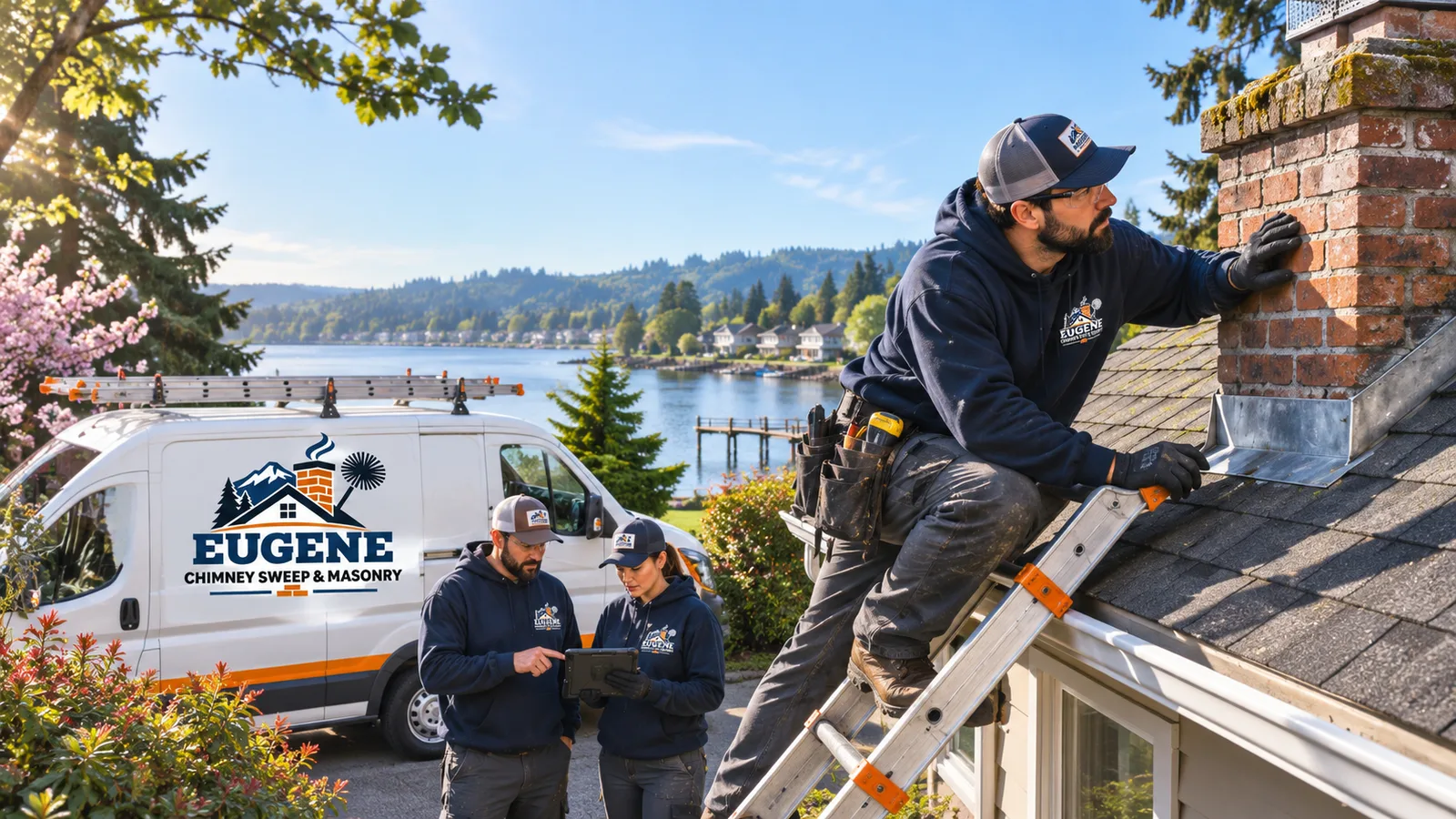
Chimney repair in Coburg starts with finding the source of the problem rather than covering the visible symptom. Cracked mortar, a damaged crown, failed flashing, loose brick, and a deteriorated flue liner can each allow water or combustion byproducts into parts of the home where they do not belong. Eugene Chimney Sweep & Masonry inspects the accessible system, documents concerns, and recommends work based on the chimney's actual condition.
Our chimney sweep specialists serving Eugene also work with property owners in nearby Coburg, where wet Willamette Valley weather makes water management an important part of chimney care. Repeated moisture exposure can open mortar joints, rust metal components, and worsen existing cracks. A timely repair can often keep a localized defect from spreading into surrounding masonry or interior finishes.
We handle repair, cleaning, sweeping, and inspection as related but distinct tasks. Cleaning removes soot and creosote. An inspection checks the structure and venting system. Repair addresses confirmed defects. Keeping those purposes clear leads to a more useful scope of work.
Inspection Before Repair
A chimney is a system, so the visible crack may not be the only concern. We examine accessible exterior masonry, mortar joints, the crown or wash, flashing, cap, firebox, damper area, smoke chamber, and flue. We also look for staining, displaced materials, gaps, and signs that water or heat has affected nearby components.
A Level 1 inspection is generally suited to a readily accessible system that has not changed and has no known trouble. A Level 2 inspection is more detailed and commonly uses video scanning of the flue. It may be appropriate after a chimney fire, a change in fuel or appliance, the sale or transfer of a property, or when a hidden defect is suspected. If concealed construction must be opened to investigate a serious hazard, a Level 3 inspection may be recommended.
The findings determine whether the chimney needs tuckpointing, crown repair, flashing work, cap replacement, limited brick replacement, or evaluation of the flue lining. The written scope should identify the defect and the proposed correction before work begins.
Repair Scope
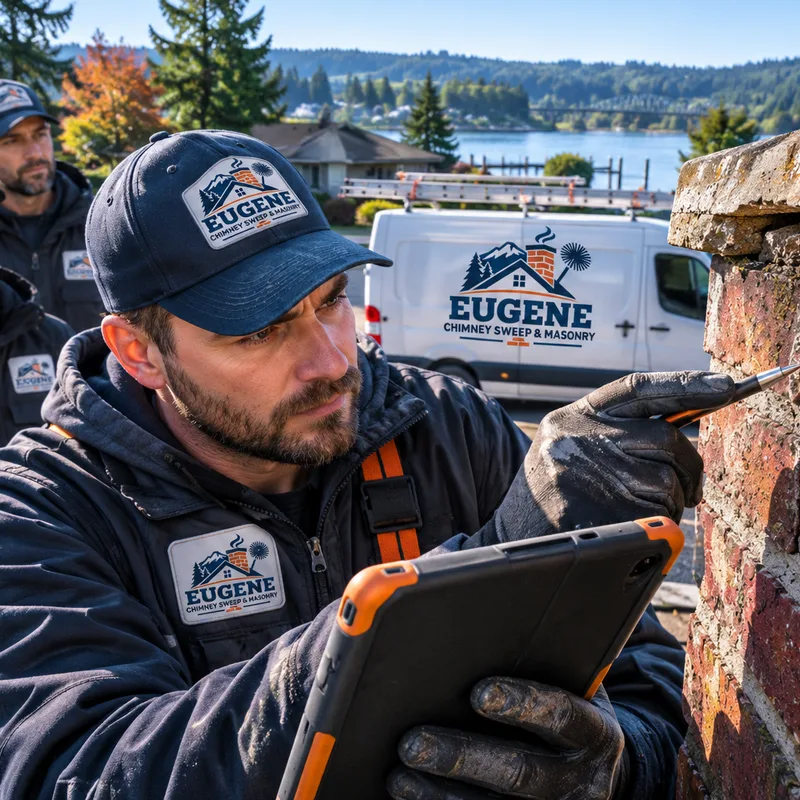
Weathered or cracked joints can admit water and loosen surrounding masonry. Tuckpointing removes unsound mortar and installs compatible new mortar without unnecessarily replacing sound brick.
The crown sheds water away from the flue and masonry. Cracks, poor drainage, or separation around the flue may call for sealing, repair, or reconstruction based on the extent of deterioration.
Step flashing and counterflashing seal the roof-to-chimney joint. Failed sealant, corrosion, or incorrect installation can allow water into the roof assembly and the rooms beneath it.
Spalling, displacement, and deep cracking require closer evaluation. Individual units may be replaceable, while widespread movement can indicate a larger structural issue.
Cracked clay tiles, missing mortar joints, or deteriorated metal liners can affect safe venting. The suitable correction depends on the appliance, fuel, flue dimensions, and documented defect.
A properly fitted cap helps limit direct rain entry and keeps animals and debris out of the flue. It must be sized and installed without restricting exhaust flow.
Cleaning and Maintenance
Coburg chimney cleaning removes combustible deposits and obstructions from the flue before they interfere with use or hide surfaces that need to be inspected. Wood-burning systems can accumulate soot and creosote, including glazed deposits that are difficult to remove. A Coburg chimney sweep should select brushes and cleaning methods that fit the flue material rather than treating every chimney the same way.
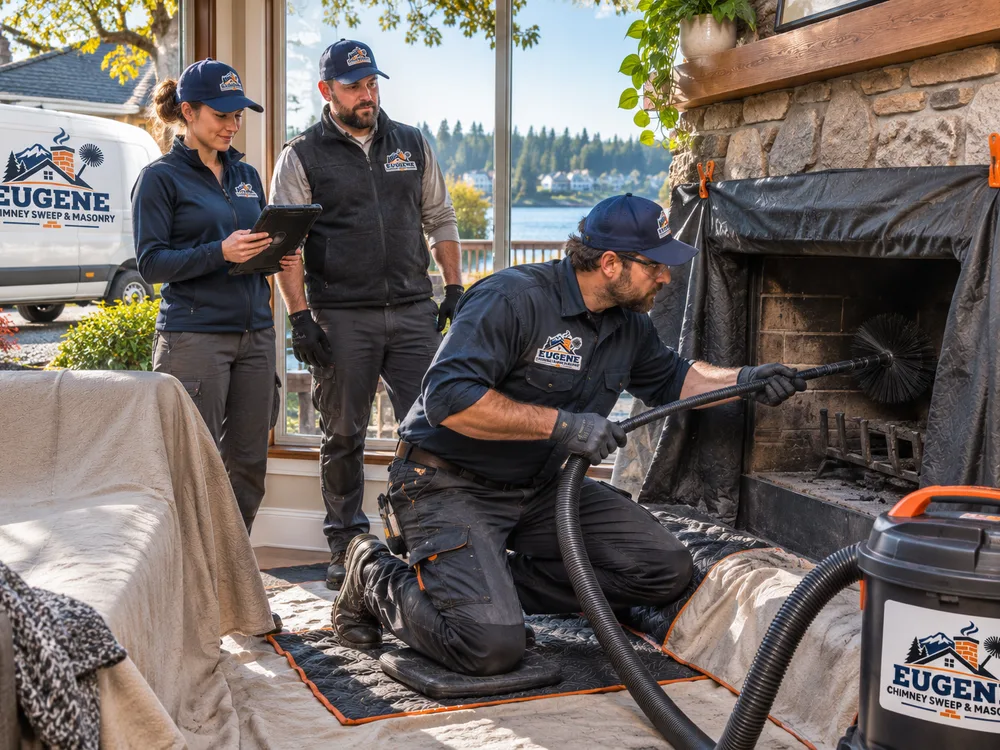
The work area is protected before sweeping begins. The flue is brushed using suitable rods or rotary equipment, loosened material is contained, and accessible components are checked during the work. If an obstruction, damaged liner, loose tile, or heavy glazed creosote is found, we explain the concern and whether additional inspection or specialized treatment is warranted.
Cleaning is maintenance, not a substitute for repair. A clean flue can still have cracked tiles, open joints, or water damage. Likewise, exterior masonry repair does not remove deposits inside the venting path. When both tasks are needed, coordinating them can make the condition easier to document and the work easier to plan.
Inspection to Completion
Step 1 of 5
We start with what you have noticed, such as leaks, odors, smoke entering the room, falling mortar, visible cracks, animal activity, or a recent chimney fire.
Step 2 of 5
The chimney exterior, firebox, damper area, flue, and roof connection are checked as access and conditions allow. Video scanning may be recommended when the flue needs closer examination.
Step 3 of 5
Soot or creosote calls for cleaning. Cracked masonry, failed flashing, liner damage, or deteriorated joints call for repair. Some chimneys need both, but each item is identified separately.
Step 4 of 5
The recommended materials and methods are matched to the defect. Access, weather, curing requirements, and the need for replacement components are considered before scheduling.
Step 5 of 5
After repairs, the completed area is reviewed and practical care instructions are provided. The fireplace or appliance should remain out of use until any required curing period has passed.
Wet-Weather Planning
Coburg sits north of Eugene in the Willamette Valley, where extended wet periods can expose weak crowns, flashing joints, and mortar. Water stains near a fireplace do not prove that the chimney is the source, but the crown and roof intersection are sensible places to investigate. Repairs should address the entry path rather than relying on a surface coating alone.
Masonry materials must also be compatible. Mortar that is much harder than older brick can shift weathering stress into the brick faces. Proper joint preparation matters too: loose material is removed to a suitable depth, dust is controlled, and new mortar is tooled and cured for the application. Painting over damaged joints or filling deep movement cracks with caulk rarely corrects the underlying condition.
Scheduling can depend on safe roof access and suitable conditions for masonry work. Wet surfaces, freezing conditions, and heavy rain can affect preparation, bonding, and curing. Interior inspection and chimney cleaning Coburg residents need may be possible at times when exterior repair should wait for a better weather window.
Planning the Investment
Chimney repairs in the Coburg area typically range from about $300 for minor sealing or small mortar repairs to $5,000 or more for extensive masonry or liner work. Crown repairs and flashing corrections often fall between those ends, while rebuilding a large chimney can cost more.
Final price depends on chimney height, roof pitch, access, material condition, repair area, liner type, scaffolding needs, and whether hidden damage appears. Cleaning or video scanning may be priced separately when needed to establish the scope. The exact cost is confirmed after an on-site inspection.
If you have noticed leaks, loose masonry, persistent odors, or smoke where it should not be, arrange an inspection before the next fire. A documented assessment gives you a clear repair plan based on the condition of the chimney.
Call for a Free EstimateHomeowner Questions
Visible masonry damage, water entry, cracked flue tiles, or failed flashing requires repair, while soot and creosote buildup requires cleaning. A chimney can need both services. An inspection in Coburg can separate maintenance needs from structural or venting defects and identify which work should happen first.
Schedule an inspection before regular use, after a chimney fire, when changing an appliance or fuel type, or when you notice leaks, odors, smoke spillage, or falling masonry. An inspection is also commonly requested during a property transfer. The inspection level depends on the system's history and the concern being investigated.
Interior evaluation may still be possible, but many exterior masonry repairs need dry surfaces and an appropriate curing window. Coburg's wet-season conditions can affect roof safety, mortar bonding, and coatings. The work should be scheduled around the material requirements rather than rushed during unsuitable weather.
A small cap, flashing, crown, or mortar repair may be completed in a working day, while broader masonry or liner work can require several visits. Roof access, weather, material availability, curing time, and the extent of hidden damage affect the schedule. The repair scope should state when the fireplace can be used again.
Sweeping may expose visible defects, but cleaning alone is not a complete flue evaluation. A video scan provides a closer view of liner surfaces and joints when a Level 2 inspection is appropriate. Some concealed conditions still require further investigation before a repair method can be selected.
Waterproofing is appropriate only after defects such as open mortar joints, crown cracks, or failed flashing have been corrected. A vapor-permeable masonry water repellent may help limit absorption on suitable surfaces, but it cannot rebuild damaged joints or seal an incorrectly flashed roof connection.
Do not use the fireplace if there is a suspected flue defect, recent chimney fire, smoke spillage, unstable masonry, or a professional recommendation to stop use. Water staining alone requires diagnosis, but cracked liners and blocked flues can affect safe venting. Wait for inspection findings and any required repair or curing period.
Tell Eugene Chimney Sweep & Masonry what you have noticed at your Coburg property. We will assess the chimney, distinguish cleaning needs from repair work, and provide a practical scope before work begins.