Mortar Joint Repair
Weathered or missing mortar is removed to an appropriate depth and replaced with compatible mortar. The joint profile is finished to shed water and bond cleanly with the surrounding masonry.
Serving Eugene, Oregon & surrounding areas
Mon–Fri 8am–6pm Sat 9am–2pm
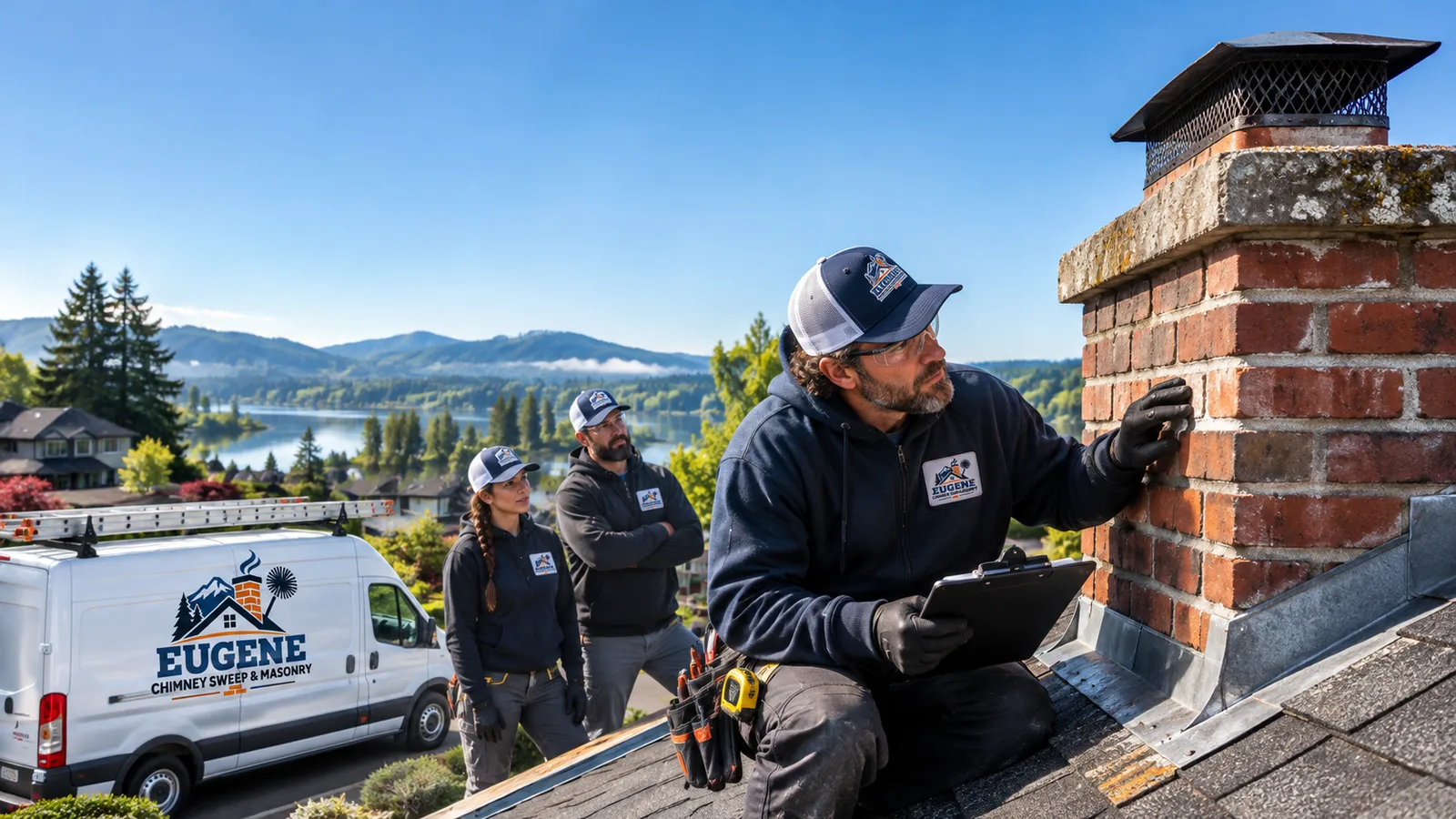
Chimney Masonry Service in Eugene, Oregon
Repair failing mortar, loose brick, damaged crowns, and liner problems with a scope based on the chimney's actual condition.
Moisture-Aware Masonry Repair
Eugene's wet winters expose weak mortar joints, cracked crowns, and gaps around flashing to repeated moisture. Once water enters masonry, it can stain interior finishes, corrode metal components, and accelerate brick deterioration. Timely chimney repair in Eugene, Oregon, addresses the entry point and the damaged material rather than covering the surface with a temporary patch.
Eugene Chimney Sweep & Masonry begins by looking at the chimney as a complete assembly. The visible stack, mortar joints, crown or cap, flashing transitions, flue tiles or liner, and accessible interior areas all provide clues. As chimney sweep specialists serving Eugene, OR, we match the repair method to the defect and explain which work is necessary now and which items can be monitored.
Local conditions make water management a central part of the repair plan. Wind-driven rain can exploit small openings, while shade can slow drying on some roofs. Chimneys on older homes in areas such as the Whiteaker and South University may also contain materials or details that have been repaired more than once. A careful inspection helps distinguish isolated mortar failure from movement, liner damage, or broader masonry deterioration.
Repair Scope
Repair recommendations are matched to the failed component, surrounding materials, and extent of deterioration.
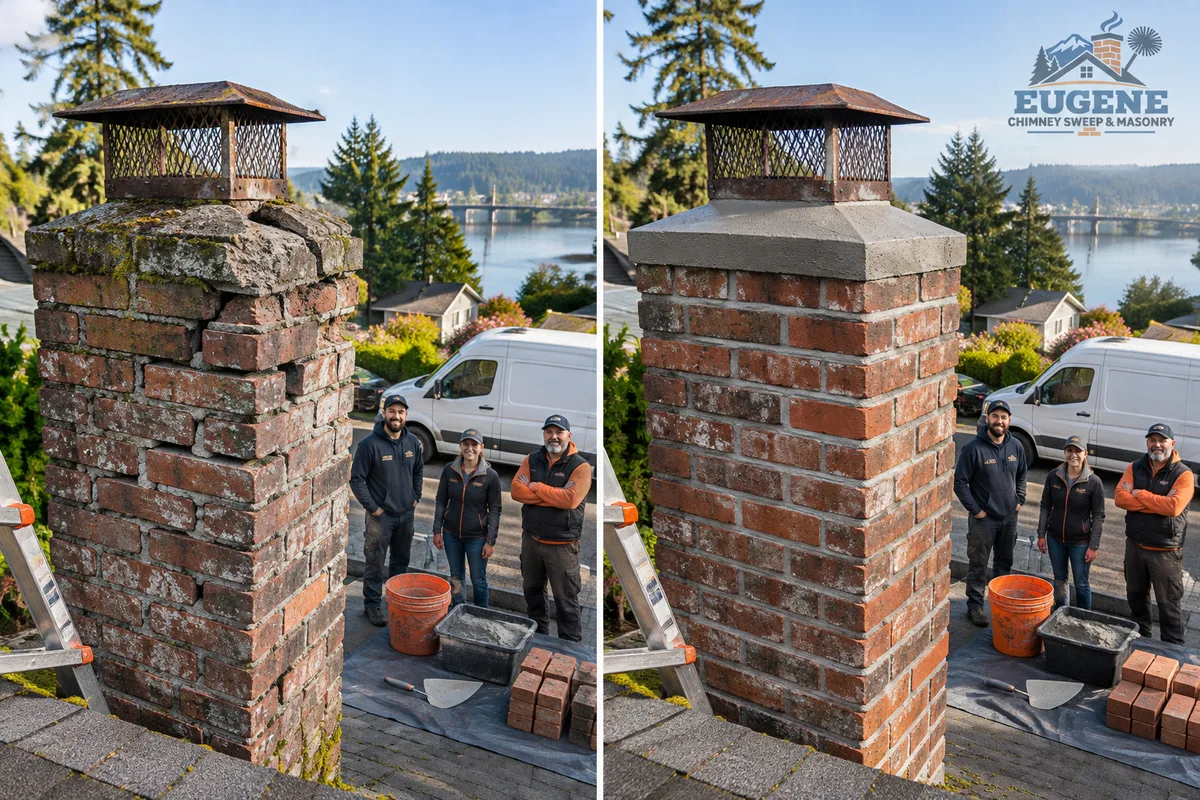
Weathered or missing mortar is removed to an appropriate depth and replaced with compatible mortar. The joint profile is finished to shed water and bond cleanly with the surrounding masonry.
Spalled, cracked, or loose bricks may require individual replacement. Replacement units should fit the existing dimensions and appearance while remaining compatible with the chimney's mortar.
Chimney tuckpointing in Eugene is suited to deteriorated joints when the bricks remain serviceable. It restores the joint rather than applying a thin surface smear that can fail quickly.
A cracked masonry crown can admit water at the top of the stack. Repair may involve sealing limited cracks, rebuilding a failed crown, or correcting inadequate overhang and drainage details.
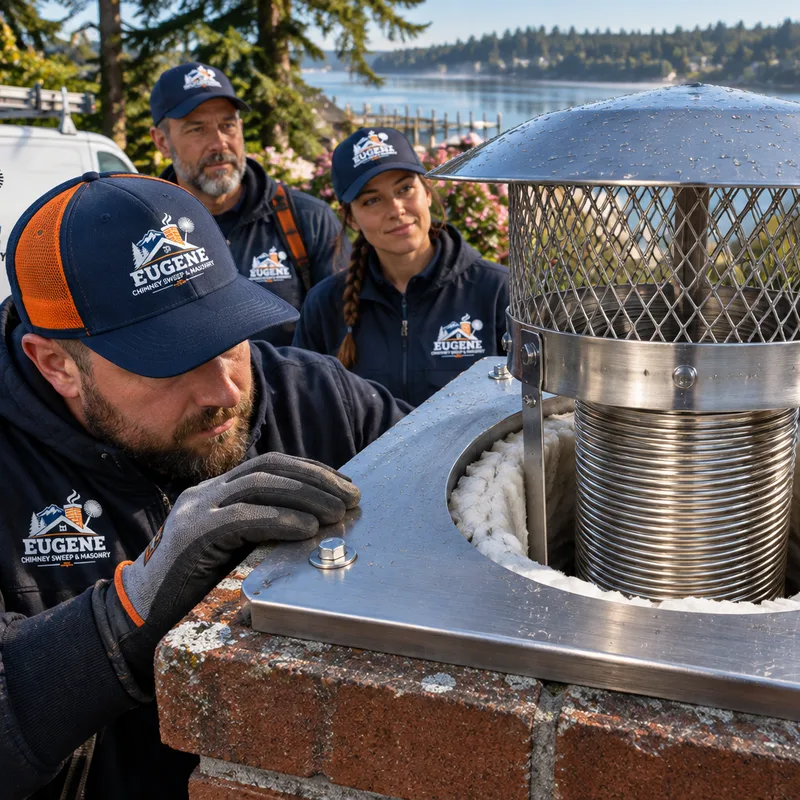
A damaged, missing, or unsuitable flue liner may require a listed liner system selected for the connected appliance and fuel. Liner work is scoped separately from exterior masonry repair.
A chimney rebuild may be appropriate when bricks are unstable, mortar loss is widespread, or previous patching cannot provide a sound repair. Rebuilding can be limited to the portion above the roof when lower masonry remains stable.
Choosing the Right Scope
The right approach depends on how far the damage extends. Localized chimney mortar repair in Eugene may be enough when deterioration is confined to several joints and the brick faces remain solid. Broader tuckpointing is considered when joint erosion covers a larger area but the stack is still stable.
Chimney restoration can include selective brick replacement, joint repair, crown correction, and careful preservation of usable masonry. It is often a better fit for an older chimney with repairable materials than removing sound work unnecessarily. The replacement mortar must be compatible with the existing brick. Mortar that is substantially harder than softer historic brick can force moisture and stress into the masonry units.
Chimney rebuilding in Eugene becomes the practical choice when courses are loose, the stack is leaning, brick faces are extensively deteriorated, or the masonry lacks a reliable base for repair. A partial rebuild removes compromised courses and reconstructs them on stable masonry. A full rebuild requires a more detailed review of support, clearances, flue construction, roof intersections, and applicable permits.
Inspection to Completion
Step 1 of 5
The assessment covers accessible exterior masonry, mortar joints, the crown, cap, flashing transitions, and visible flue components. Interior signs such as staining or loose debris are considered when defining the source of damage.
Step 2 of 5
The findings separate safety concerns and active water entry from cosmetic wear. The written scope should identify the repair area, proposed materials, access needs, and any conditions that may require further investigation.
Step 3 of 5
Roof access, staging, and protection are planned before demolition begins. Failed mortar and damaged masonry are removed without disturbing sound adjacent work.
Step 4 of 5
New mortar is packed into properly prepared joints, replacement brick is set to maintain bond and alignment, and rebuilt courses are kept plumb. A liner is installed only as a system suitable for the appliance and flue conditions.
Step 5 of 5
Fresh masonry needs suitable curing conditions and protection from heavy rain or rapid drying. The finished work is reviewed for joint finish, crown drainage, cap fit, and clean transitions at the roof.
Flue and Venting Work
A liner carries combustion gases out of the building and helps isolate heat and byproducts from surrounding construction. Visible exterior damage does not automatically mean the liner has failed, and a sound-looking stack does not confirm that the flue is suitable. Liner decisions should be based on the flue's condition, dimensions, fuel type, appliance requirements, and chimney configuration.
Common systems include clay flue tiles in masonry chimneys and listed stainless steel liners used for appropriate repair or appliance applications. Installation may require insulation, connectors, top plates, and terminations specified for the chosen system. The liner must be sized for the connected appliance rather than selected solely by the existing opening.
Eugene falls within Oregon's statewide building-code framework, while permits and local requirements may depend on the exact work and appliance connection. A repair scope should identify whether the project is masonry-only, involves a liner, or changes a venting system that needs additional review.
Planning the Investment
Chimney repair in Eugene typically ranges from about $500 to $2,500 for localized masonry, crown, or mortar work. Larger tuckpointing projects often run about $1,500 to $5,000, while partial or full rebuilding and liner installation may range from $3,000 to $15,000 or more.
Final price changes with chimney height, roof pitch, staging needs, brick availability, demolition, liner specifications, and concealed damage. Permit requirements and protection for finished roofing can also affect labor. The exact cost is confirmed after an on-site inspection defines the repair scope.
Clear Scope and Materials
A chimney repair proposal should describe the observed defect, not merely prescribe a generic coating or sealant. For mortar work, look for details about joint preparation, mortar compatibility, repair depth, and curing. For brick replacement, the scope should identify how damaged units will be removed and how replacement brick will be matched. Rebuilding work should define the portion being removed and the components being reconstructed.
Water-repellent treatment is not a substitute for replacing loose mortar, failed brick, or a defective crown. When a breathable masonry treatment is appropriate, it comes after necessary repairs and curing. Likewise, roofing cement spread around a chimney may hide a flashing problem without creating a durable counterflashing detail.
Access matters too. A steep roof, tall stack, limited setup area, or nearby overhead obstructions can change the equipment and schedule needed for safe work. A clear scope accounts for these conditions before work starts. Eugene Chimney Sweep & Masonry can assess the visible damage and provide a repair plan tied to the actual construction of the chimney.
Have cracks, loose brick, interior staining, or falling mortar checked before another wet season gives water a larger path into the chimney.
Call for a Free EstimateHomeowner Questions
Tuckpointing is appropriate when mortar joints have deteriorated but the bricks and stack remain stable; rebuilding is considered when masonry is loose, displaced, leaning, or extensively spalled. An inspection should determine whether damage is isolated to the roofline, limited to upper courses, or present through a larger part of the chimney.
Localized brick or mortar repair may take one to several working days, while extensive tuckpointing or a chimney rebuild can take longer because demolition, setup, weather, and curing affect the schedule. Eugene rain can interrupt exposed masonry work, so the plan should include temporary weather protection and suitable curing conditions.
Mortar repair can stop water entry when open joints are the actual source, but leaks can also come from the crown, cap, flashing, roof materials, or condensation inside the flue. Staining near a chimney should be traced before repairs begin so the scope addresses the entry point rather than only the visible symptom.
Some inspections and protected work can proceed in damp conditions, but masonry placement needs suitable temperatures, a reasonably dry substrate, and protection from heavy rain. Because Eugene has a wet cool season, scheduling and temporary covers are often part of a responsible repair plan.
Liner installation may be needed when the existing flue is damaged, missing, incorrectly sized, or unsuitable for the connected appliance. The correct liner depends on fuel, appliance instructions, flue dimensions, chimney height, and required clearances, so exterior masonry condition alone cannot answer the question.
A close match is usually possible, but fresh mortar may initially differ in color as it cures and dries. Matching considers color, aggregate, joint profile, and hardness. On older Eugene homes, material compatibility is more important than forcing an exact color with mortar that is too hard for the existing brick.
Permit requirements depend on the project scope, structural changes, and whether venting or appliance connections are altered. Work within Eugene may be reviewed under local administration of Oregon building codes, so permit needs should be confirmed after the repair scope is defined.
Tell Eugene Chimney Sweep & Masonry what you have noticed. An inspection can identify the damaged components, separate urgent work from routine maintenance, and establish a written scope for repair, restoration, or rebuilding.