Chimney Cleaning
A Creswell chimney cleaning removes soot, ash, and accessible creosote from the flue and related components. The method depends on the appliance, liner type, chimney height, buildup, and access.
Serving Eugene, Oregon & surrounding areas
Mon–Fri 8am–6pm Sat 9am–2pm
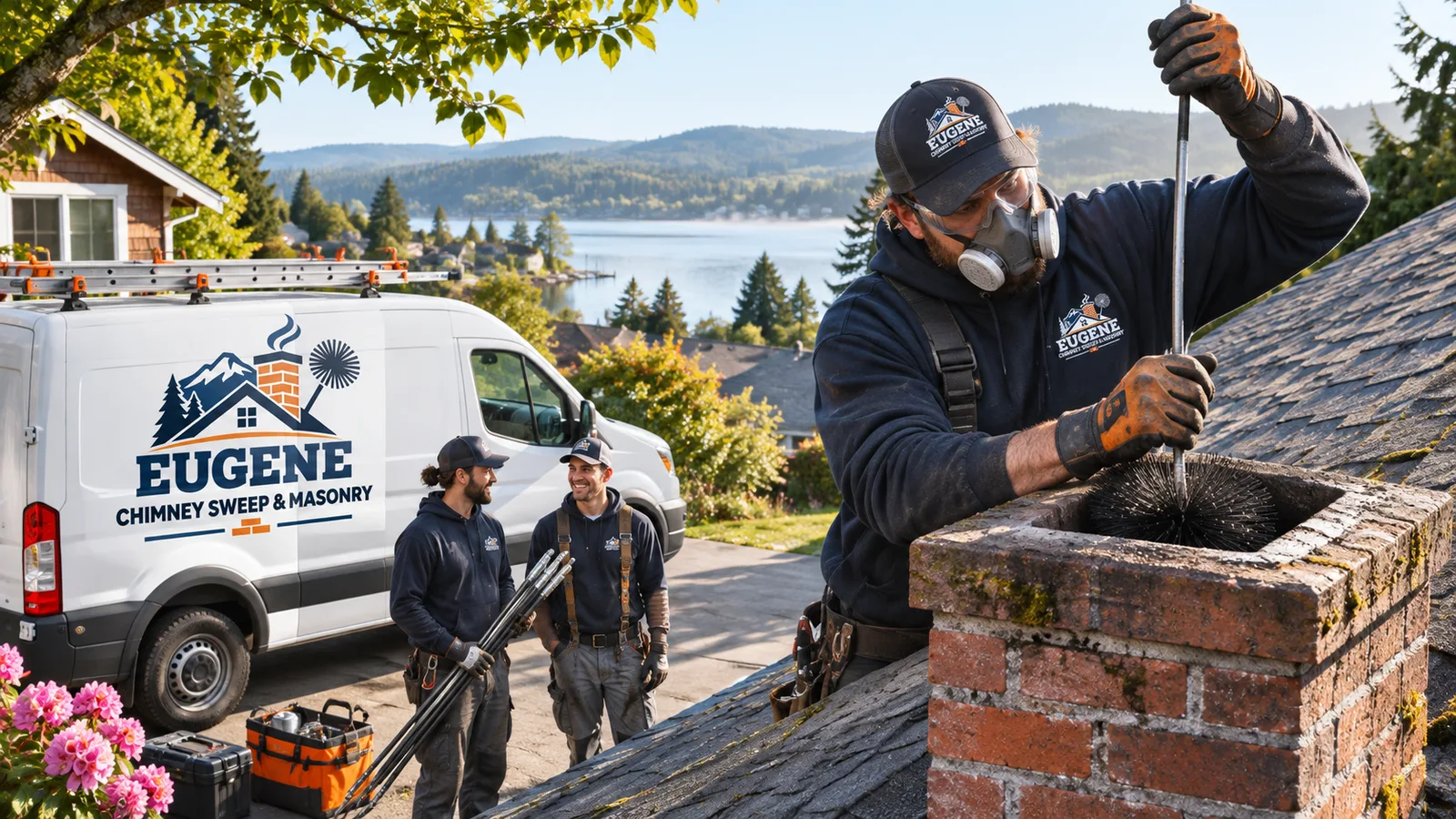
Chimney Cleaning in Creswell, Oregon
Thorough cleaning, camera-assisted inspection, and practical repair recommendations for a safer, cleaner-burning fireplace or wood stove.
Complete Chimney Care
A chimney sweep in Creswell should do more than run a brush through the flue. Eugene Chimney Sweep & Masonry removes soot and accessible creosote, checks the venting system, and identifies conditions that may affect safe operation. The work can cover fireplaces, wood stoves, inserts, connectors, smoke chambers, and masonry chimneys when those components are present.
Our crew travels south from Eugene to serve Creswell homeowners. At each appointment, Eugene's local chimney sweep service uses floor protection and controlled cleaning methods, then clearly explains what we found. Creswell's wet-season weather can expose vulnerable mortar joints, crowns, flashing, and chimney caps to repeated moisture. That makes the exterior condition relevant as well as the flue interior.
The goal is a clean venting path and an accurate account of the chimney's condition. If the system needs repair, you receive a defined scope based on visible defects and inspection findings rather than a vague recommendation.
Service Scope
A Creswell chimney cleaning removes soot, ash, and accessible creosote from the flue and related components. The method depends on the appliance, liner type, chimney height, buildup, and access.
A chimney inspection in Creswell checks accessible portions of the firebox or appliance, connector, flue, cap, crown, flashing, and exterior masonry. Video scanning may be used when the flue interior needs closer evaluation.
Chimney repair in Creswell may address failed mortar joints, damaged crowns, missing or deteriorated caps, flashing defects, cracked firebox components, or liner concerns. Repairs are recommended according to the defect found.
Open fireplaces and wood-burning appliances have different venting arrangements. The sweep method and inspection points are matched to the system instead of treating every chimney alike.
During Your Appointment
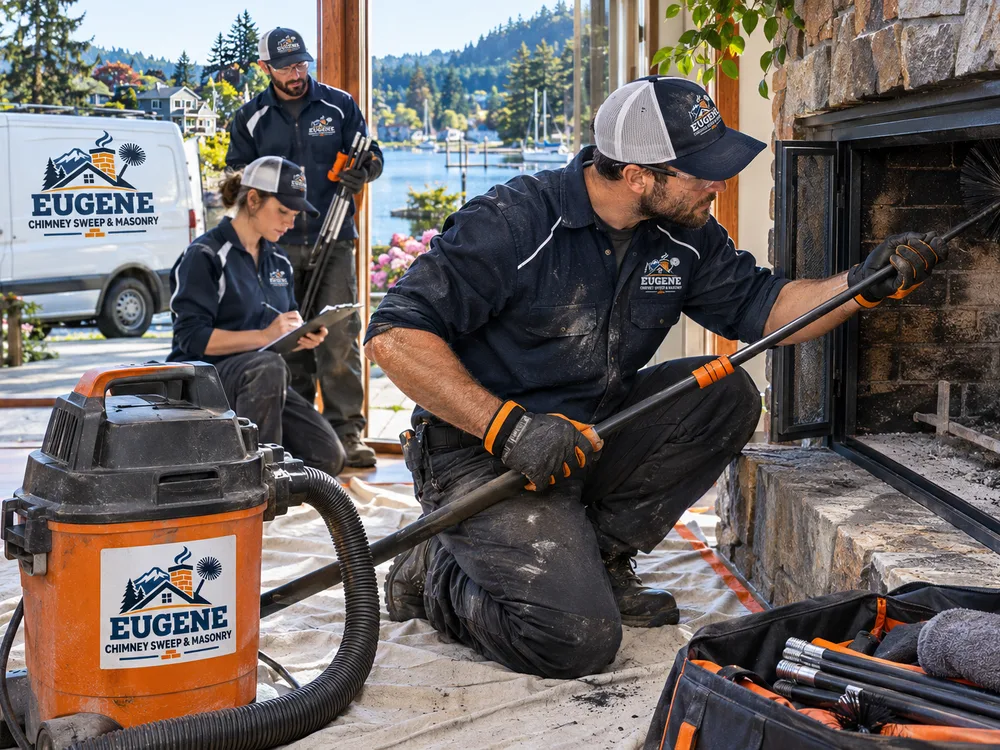
The appointment begins by confirming the appliance and venting configuration. Before brushing starts, the work area is protected and the technician checks accessible components for damage or unusual deposits. A suitable brush or rotary system is then used to loosen residue inside the flue. A controlled vacuum helps contain soot and fine debris.
Cleaning is followed by a visual review of accessible areas. This may include the firebox, damper, smoke chamber, connector pipe, liner, chimney cap, crown, flashing, and exterior masonry, depending on the system and access. The technician also looks for signs such as glazed creosote, gaps, corrosion, water entry, displaced flue tiles, or animal nesting material.
Creosote does not always behave like loose soot. Glazed deposits can be hard, shiny, and resistant to routine brushing. If deposits cannot be safely removed during a standard sweep, the condition should be documented and the next treatment explained. A responsible Creswell chimney sweep distinguishes between normal cleaning and work that requires a separate scope.
Inspection to Completion
Step 1 of 5
We identify the fireplace, stove, insert, connector, and flue arrangement, then determine whether the chimney can be serviced safely from the appliance, roof, or a combination of access points.
Step 2 of 5
Floor coverings and soot-control equipment are placed before cleaning. The fireplace or appliance opening is managed to reduce dust and debris in the room.
Step 3 of 5
Brushes or rotary tools are selected for the flue shape and liner material. Soot and accessible creosote are loosened and collected without using a method likely to damage the liner.
Step 4 of 5
The technician reviews the cleaned system and exterior areas that can be reached safely. Camera equipment may be used when a closer view of the flue interior is needed.
Step 5 of 5
You receive a plain account of observed conditions. If repair or further evaluation is warranted, the reason and proposed scope are separated from routine maintenance.
Warning Signs and Inspection Levels
Schedule an evaluation if smoke enters the room, odors persist when the system is cold, debris falls into the firebox, or staining appears near the chimney. A damaged cap, visible mortar loss, cracked crown, rusted components, or signs of water entry also warrant attention. Stop using the appliance if you suspect a chimney fire, see displaced masonry, or notice a sudden change in draft.
The National Fire Protection Association's Level 1, Level 2, and Level 3 inspection framework helps define how closely a system should be examined. A Level 1 inspection generally applies to an unchanged system under continued use. A Level 2 inspection adds accessible areas and video scanning and is commonly appropriate after a property transfer, a change to the appliance or fuel, a chimney fire, or another event that may have caused damage. A Level 3 inspection can involve removal of building components and is reserved for suspected concealed hazards that cannot be confirmed by less invasive methods.
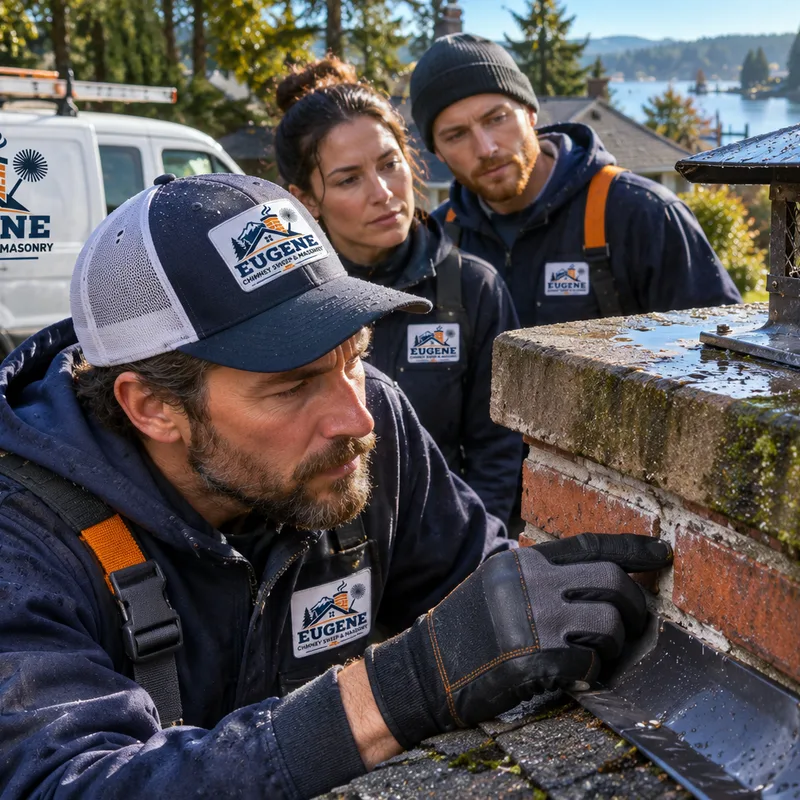
Creswell's rainy part of the year makes water management an important exterior check. A sound cap, crown, flashing transition, and mortar system help keep water out of the chimney structure. Cleaning cannot correct those defects, so repair recommendations should identify the failed component and the work needed.
Between Service Visits
Burn only properly seasoned firewood in a wood-burning fireplace or stove, and follow the appliance manufacturer's instructions. Wet wood tends to produce cooler, smokier fires and more deposits in the venting system. Do not burn household trash, painted lumber, or treated wood. Ash should be placed in a metal container with a tight-fitting lid and kept away from combustible materials until fully cold.
A chimney cap can help limit rain entry and discourage animals from entering, but it must be sized and installed without restricting exhaust. Keep combustible items away from the hearth or appliance. Smoke alarms and carbon monoxide alarms should be installed and maintained according to their manufacturers' directions and applicable requirements.
Cleaning frequency depends on use, fuel quality, appliance operation, and the type of deposit present. The commonly cited NFPA guidance is to have chimneys, fireplaces, and vents inspected at least annually and cleaned, maintained, or repaired when necessary. Heavy use or rapid buildup can justify service sooner.
Arrange service before regular burning begins, or sooner if you notice smoke, odor, falling debris, water entry, or a change in draft.
Call for a Free EstimateHomeowner Questions
Schedule an inspection at least annually and cleaning whenever deposits or obstructions make it necessary. Actual cleaning frequency depends on how often you burn, the moisture content of the wood, appliance operation, flue design, and the deposits found. A household that burns frequently through western Oregon's cool, wet months may need attention sooner than an occasionally used fireplace.
A routine cleaning and basic inspection often takes about one to two hours, although the actual time depends on access, chimney height, appliance type, buildup, and the number of flues. Glazed creosote, animal material, difficult roof access, or the need for detailed video scanning can extend the visit.
Yes, an inspection can still be appropriate because moisture, animals, corrosion, and masonry deterioration can affect a chimney even when fires are infrequent. In Creswell's rainy climate, exterior components such as the cap, crown, flashing, and mortar joints can deteriorate independently of how often the fireplace is used.
Cleaning fixes smoke problems only when soot, creosote, or an obstruction is the cause. Smoke entry can also result from a closed or damaged damper, a cold flue, inadequate combustion air, an unsuitable flue, house depressurization, or an appliance problem. The venting system should be assessed before a repair is proposed.
Let the fireplace or stove cool completely and remove fragile objects from the immediate work area. Keep pets away and provide clear access to the appliance. If roof access may be required, the technician will assess weather and surface conditions; wet, icy, or unsafe roofing can require rescheduling that portion of the work.
A video scan is appropriate when the flue liner needs close examination or when a Level 2 inspection is called for. Common triggers include a home sale, appliance or fuel change, suspected chimney fire, severe weather damage, or evidence that a defect may exist inside the flue.
Minor service may sometimes be completed during the cleaning appointment, but substantial repair usually needs a separate scope. Crown work, masonry repair, flashing correction, liner work, and component replacement depend on access, materials, weather, and the defect confirmed during the Creswell chimney inspection.
Tell Eugene Chimney Sweep & Masonry about your fireplace or wood stove, any symptoms you have noticed, and when it was last serviced. We will help determine the appropriate cleaning, inspection, or repair appointment.